The Record and the Reason
It began with a complaint. With war on the European continent and beyond grinding towards its endgame, the Boston Women’s Co-operative Guild sought clarity on an issue internal to the Peterborough and South Lincs Women’s Advisory Committee (WAC) and its constituent sections: the limits of fare-pooling arrangements. Were fares to be pooled for all conference delegates or not? It turned out they were not. Issue solved? Not quite. Next came the suggestion of abolition, with one Committee member suggesting that others consider whether to ‘dispense with the issue altogether’. However, this was no one-woman show. There was sufficient agreement ‘in principle’ with fare-pooling to prompt a renegotiation of the Committee’s rules to accommodate this collective arrangement and to debate and create a structure for its administration. Taken together, the minuting and sequencing of deliberations allows us to reconstruct how a local democratic organisation operated and how institutional rules were (re-)negotiated. That said, the minutes are mystifying as to why fare-pooling was a contended issue, highlighting how minute-taking practices can, through reductive phrasing, entomb the substance of debate beyond the reaches of historical analysis.
Introduction
The members of the Peterborough and South Lincs Women’s Advisory Committee (WAC) collectively deliberated upon and disagreed about fare-pooling arrangements in the final years of the Second World War and its immediate aftermath (1944 to 1946). We know this because it was documented. However, the terse recording of “discussions” in the minutes makes advancing arguments about why Committee members disagreed difficult, and necessarily cautious. This is duly noted but it does not mean that we should cast these artefacts aside into the (hackneyed) “dustbin of history”. Shifting the focus to a “discussion” of the process of democratic organisation, this post asks: What can the minutes of the WAC tell us about how it governed itself, even when the written record cannot tell us exactly why individual members disagreed? It turns out that such documentary traces can tell us much about the negotiation of the WAC’s rules and administrative authority. Thus, while the way the cost of trips was divided (or not) may appear a trivial matter, how such arrangements were reached and administered can tell us something about the mechanisms for resolving disagreements as well as who had the authority to decide. All this can be gleaned from the documentary record. This also reminds us that, as well as providing an official (albeit abridged) record of what happened, the minutes, when read against the grain, reveal the traces of processes that are only partially or indirectly recorded.
WACs: A Short Note
The origins of WACs can be traced back to the Women’s Labour League (WLL). The WLL, which was affiliated to the Labour Party, was established in 1906 and functioned as promotor of and campaigner for the political representation of women, with women’s suffrage being a core issue. With the introduction of the Representation of the People Act 1918, which granted some women the right to vote, the WLL was disbanded, becoming the official Women’s Section of the re-constituted Labour Party [1]. The role of WACs was, as the name suggests, “advisory” to their respective Constituency/Divisional Labour Party. Membership of the Peterborough and South Lincs WAC illustrates that the body consisted of the secretaries of women’s sections in the region, as well as allied groups, such as the National Union of Railwaymen Women’s Guild. While the WAC played only a minimal role in candidate selections for local/parliamentary elections, it was central to the social and relational life of the party.
Recording and the Limits of Interpretation
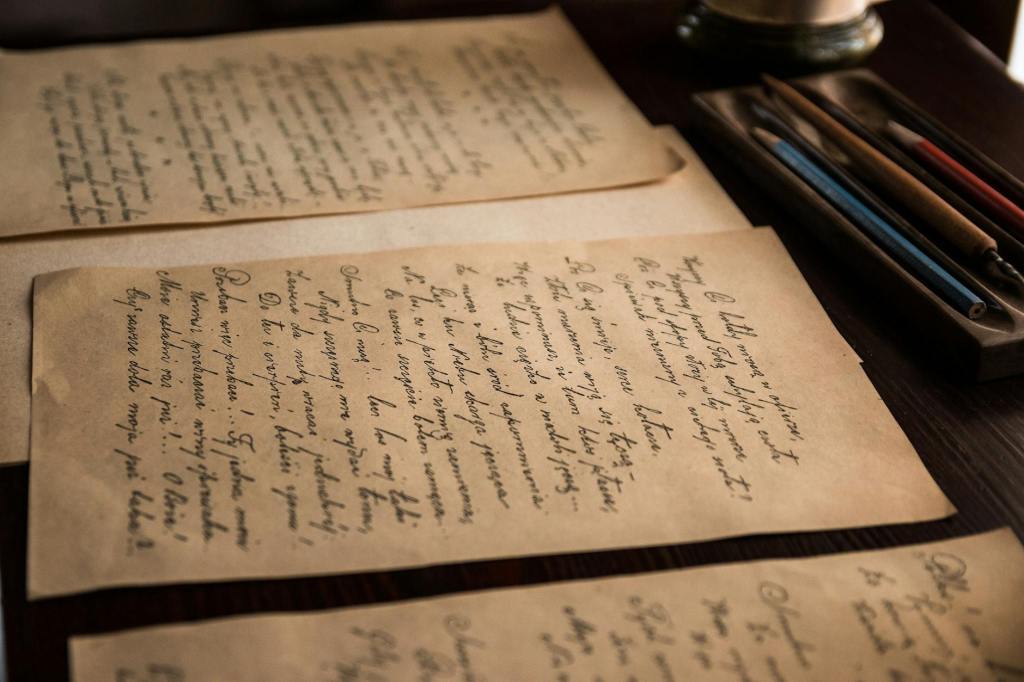
Before we get into the analysis of the fare-pooling debate as it appeared in the WAC’s minute book, it is important to scrutinise how that debate was recorded. To begin with, it should be noted that it is significant that references to the debate were documented at all. From this fact we may surmise that the pooling of fares was deemed organisationally important enough for it to be logged, on multiple occasions, into the official record of WAC business. In other words, it counted as a noteworthy activity. Indeed, anyone who has attended meetings will be aware that – in addition to a high percentage of them being soul-destroying – not everything is recorded. This selectivity is important as there are often material consequences of something being written down: a particularly stark reminder of this can be found in James Tyner’s The Politics of Lists [2].
It is instructive to distinguish between different item types and their recording. The first reference to fare-pooling comes in the form of a letter (“correspondence” in WAC-speak). The item was read and responded to, like-for-like, as a letter. This handling of Committee correspondence was conventional, a baked-in dimension of organisational procedure. In terms of attribution, the individual proposers and seconders of motions are consistently named, while statement/recommendation types receive no or collective credit. That said, the minutes suggest a possible relationship between attribution and organisational authority that might explain the individualisation of attribution we see in the case of Mrs Kay, a Regional Organiser:
‘There were no amendments to the constitution, but the question of pooling of fares was discussed at length. Mrs Kay explained the situation & suggested that we decide to have 2 official delegates from each section, or dispense with the issue altogether.’ [3]
Mrs Kay is regularly attributed by name throughout the WAC minute books for the 1944-1946 period. The third and, for present purposes, most significant recording practice concerns the inscription of “discussions”. Discussions are often noted as taking place but rarely attributed, albeit with exceptions such as the illustrative example below:
‘A good discussion took place upon amendments to constitution & pooling of fares. Several Council members present stated that their sections were in agreement with the pooling of fares, and it was moved by Mrs Adams seconded by Mrs Sidebottom, that the minutes agreed to at the last Annual Meeting, ‘that there be 2 official delegates from each section’ be rescinded…’ [4]
Here it is written that a discussion occurred followed by the collective attributor ‘Several Council members’. Further on we see how, once the threshold of proposing a motion was reached, individual attribution was triggered. The other key point to note about these “discussions” is that the minutes are frugal to a fault regarding the content of these conversations. This passage illustrates the preservation of proposals and outcomes while the precise grounds for disagreement are left unexplained. Furthermore, this recording practice has a “smoothing” effect. For instance, some WAC meetings may have been ill-tempered but reductive phraseology – such as “good discussion” – strips any conversation, dialogue, or argument of affect. It also has a silencing effect on individual voices as it becomes impossible to distinguish which members were heard and which were not. As such, the minutes do not allow for a detailed reconstruction of each participant’s actions or motivations; however, we can reconstruct the sequence of decision making, an endeavour that reaps its own rewards.
The WAC’s Fare-Pooling Debate: Motivations and Negotiations
Let us begin with some suppositions. We can postulate several motivations for the WAC’s fare-pooling arrangement without being able to nail down the definitive driver. The possibilities, and these are neither exhaustive nor necessarily exclusive, include a desire to share the financial burden of attending meetings or events by distributing costs more equitably with members travelling from various distances. In this regard, it is noteworthy that the letter of complaint concerning the system of fare-pooling in December 1944 came from the Boston section – travel for a member from the Lincolnshire market town to central Peterborough, where meetings were invariably held, likely presented more challenges than, say, for a member travelling from Peterborough’s North Ward [5]. As such, considerations of equity and affordability may have been an important factor. Furthermore, that the WAC and constituent sections were not flush for cash raises the plausibility of this explanation. Nevertheless, we must be cautious: the record of the complaint says nothing about travel or its costs, focusing instead on the terms of fare-pooling arrangement.
Alternatively, it may have been the case that the primary driver was logistical (i.e., a wish to establish practical arrangements for collective travel) rather than a response to financial hardship. Then again, the arrangements may have been about negotiating competing claims – the minutes refer to ‘discontent’ [6]. However, due to the lack of attribution in the minutes, it is difficult to comment with any certainty on the extent of disagreement with the arrangement; we have the letter from the Boston section, but they were (seemingly) content following a reply from the WAC secretary [7]. A further rationale may have been maintaining organisational solidarity, with fare-pooling acting as an expression of mutual assistance. However, there is no supporting evidence for this ethos driving decision making. To my mind, the most plausible explanation for the fare-pooling system is that it marks an attempt by the Committee to manage its collective resources. As with all interpretations, this requires stress-testing.
So, which argument holds the most weight? Establishing a sequence of events is beneficial in this regard, bringing into relief the course and evolution of negotiations over time. In December 1944, as we know, the Boston Women’s Co-op Guild sent a letter to the WAC ‘complaining’ of the ‘system of pooling’ for the September conference. The Guild was of the understanding that ‘all delegates fares would be pooled’. However, this was a view held in error, something which the WAC Secretary pointed out to the Guild in a written reply [8]. The issue re-emerged in October-November of the following year, in October it was recommended, though we do not know by who, that the arrangement be ‘discontinued’ due to ‘some discontent’ [9]. The aforementioned Mrs Kay followed this up (somewhat tetchily if the minutes are anything to go by) in November (22nd) when she asked the Committee to either have two official delegates or ‘dispense with the issue altogether’ [10].
The arrangement was not done away with as the minutes of November 29th 1945 and February 1946 indicate. In November, it was established that ‘the majority [of Committee members] agreed in principle [my italics] with the idea’, at which point it was decided to refer back the recommendation for the system’s discontinuation to the WAC’s constituent women’s sections [11]. For February, the minutes record that ‘[a] good discussion took place upon amendments to constitution & pooling of fares’. We learn that several members of the Committee ‘were in agreement’ with fare-pooling. At the same meeting, it was proposed that the arrangement whereby fares were pooled to support two delegates per section attending conferences be rescinded and replaced with a system in which fares were to be pooled for one delegate per section. Interestingly, the minutes also note a proposition that nominations be sought for a ‘pooling secretary’ [12]. This is fascinating, not only do we observe the mechanisms by which the Committee explored the revision of the fare-pooling arrangement (democracy in action), but also consideration of its implementation and administration. Indeed, the final reference to fare-pooling came in March 1946 and focused on the procedures for appointing a pooling secretary [13].
In summary, the first and second recorded mentions of fare-pooling were about clarifying the rules of the arrangement. The third and fourth show how the Committee was considering the abolition of the fare-pooling arrangement. The fifth and sixth indicate moves towards revising the arrangement. The seventh and eighth constitute deliberations on and formalisation of the arrangement’s administration.
To reiterate, the minutes only ever tell us that the rule changed, they do not explicitly state why. Nevertheless, the interpretation that the fare-pooling debate was about managing a collective arrangement of the Committee and constituent sections seems the most plausible given that the WAC settled on the pooling of fares for one delegate from each section, rather than two. Additionally, the minuting that most Committee members agreed ‘in principle’ with fare-pooling is suggestive of a distinction between the desirability of the arrangement and the challenges associated with implementing it. In the end, the arrangement was retained but its scope limited, with a position being established to ensure its smooth running. More than a record of what happened, the fare-pooling debate, as documented, demonstrates the negotiation of institutional rules through which a collective arrangement could be maintained and highlights the recording conventions by which negotiation was inscribed. In other words, the record illustrates the documentary politics of negotiation.
Conclusion:
While a local/regional debate about the pooling of fares may seem mundane, it is a window into the (documentary) work involved in maintaining a collective arrangement within a democratic organisation. In themselves, the minutes allow historians to reconstruct a sequential negotiation (i.e., deliberation A took place on date X; decision B was reached on date Y); however, they do not capture the underlying rationale for debates in the first place. Historians need not be apologetic for this opacity. It is important to remember that we are working with a written record of negotiation, an attempt to, pithily, make verbal conversation legible in writing. Indeed, the negotiation itself has been filtered through particular practices of recording, shaping what aspects become visible to historical analysis. The evidence shows that the WAC negotiated to revise its rules and documented the process of deliberation. However, it does not establish that everyone had an equal voice or that fare-pooling was intended to overcome barriers to participation. Thus, the minutes make visible certain democratic processes while the evidence permits us to say much less about democratic outcomes in practise. This invites us to think about negotiation not only as a documented practice but also as a documentary practice. The addition of comparative material would enable us to understand if this is patterned recording behaviour (i.e., if negotiation is recorded in particular ways) within WACs, the Labour Party, and democratic organisations more generally. Overall, the WAC’s minutes reveal not only the sequence of negotiations over fare-pooling, but also how documentary practices make the processes of democratic organisation (in)visible to historical inquiry.
References:
[1] Christine Collette, For Labour and for Women: The Women’s Labour League 1906-18 (Manchester: Manchester University Press, 1989), 132-34.
[2] James A. Tyner, The Politics of Lists: Bureaucracy and Genocide Under the Khmer Rouge (West Virginia Press, 2018).
[3] Report of Conference held on Nov 22nd [1945] in the Labour Rooms.
[4] Minutes of meeting held on February 20th 1946 at Peterborough.
[5] Minutes of meeting held in […].R. Room, Geneva St. Peterborough on Dec. 6th 1944.
[6] Report of meeting of Officials at Peterborough Oct. 17th [1945].
[7] Minutes of meeting held in […].R. Room, Geneva St. Peterborough on Dec. 6th 1944.
[8] Ibid.
[9] Report of meeting of Officials at Peterborough Oct. 17th [1945].
[10] Report of Conference held on Nov 22nd [1945] in the Labour Rooms.
[11] Minutes of Council members[’] meeting held on Nov. 29th [1945] at Peterborough.
[12] Minutes of meeting held on February 20th 1946 at Peterborough.
[13] Minutes of Annual Meeting held on March 13th 1946 in the Labour Rooms at Peterborough.


Leave a Reply